Conversational troubleshooting
Seek guidance as a fault investigation unfolds rather than following only a fixed checklist. A conversational interface can help users navigate information across different parts of a procedure.
Potential benefits
- Reduce searching between related sections during a fault investigation.
- Help less experienced users access relevant troubleshooting knowledge.
- Support quicker progress toward a diagnosis when the reference content covers the issue.
Relevant challenges
Maintenance and Troubleshooting
- Experts are not always available when a problem occurs
- Rare faults are difficult for less experienced technicians to diagnose
How the approach works
The user asks about the current difficulty and follows relevant information or clarification as the investigation develops. The assistant draws on the available documentation, allowing questions to move between procedure sections.
Research and demonstrations
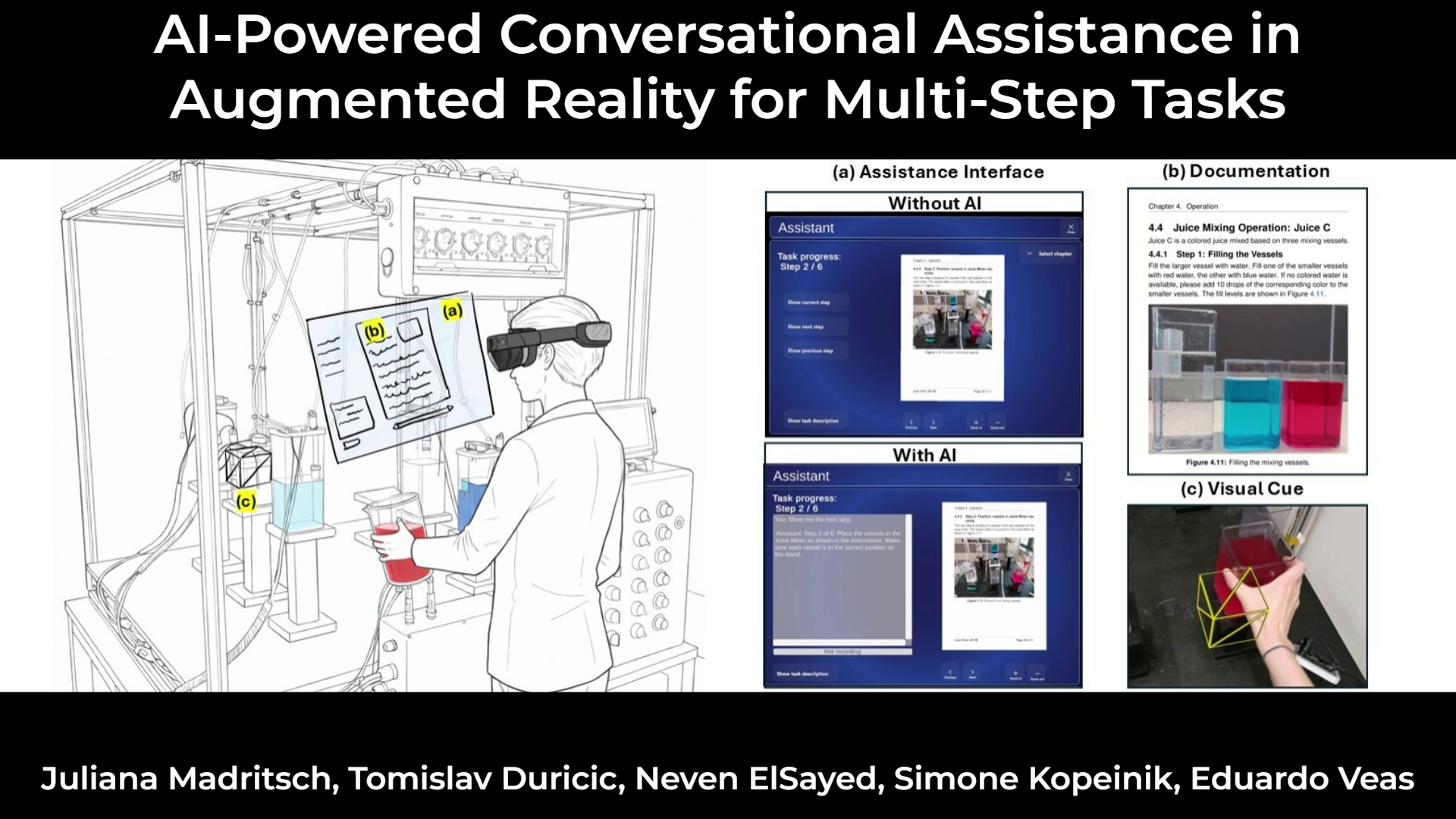
The conversational augmented reality (AR) study includes a troubleshooting task that requires information from different parts of a procedure. It provides an example of assistance that follows questions beyond a single linear sequence.
Adapting it to your workflow
A project would extend the reference content and fault coverage for the target equipment, evaluate answer quality and define how confirmed machine information should be incorporated where needed.
What a project could evaluate
A project could assess the relevance of suggested information, the ability to navigate between related issues and whether users can progress through representative fault investigations. A pilot could compare diagnosis time, documentation-search time and the need for specialist intervention.