Inspect difficult environments remotely
Explore how robots, cameras and sensor platforms could support inspection where access is difficult or hazardous. The workflow can connect navigation, observation and later review by specialists.
Potential benefits
- Reach inspection areas that are difficult or hazardous for people to access.
- Reduce travel or human exposure for tasks suited to remote inspection.
- Collect observations that specialists can review without repeating every site visit.
Relevant challenges
Inspection and Monitoring
- Inspections can require people to enter dangerous or hard-to-access environments
- Difficult terrain or inaccessible infrastructure can limit inspection frequency
How the approach works
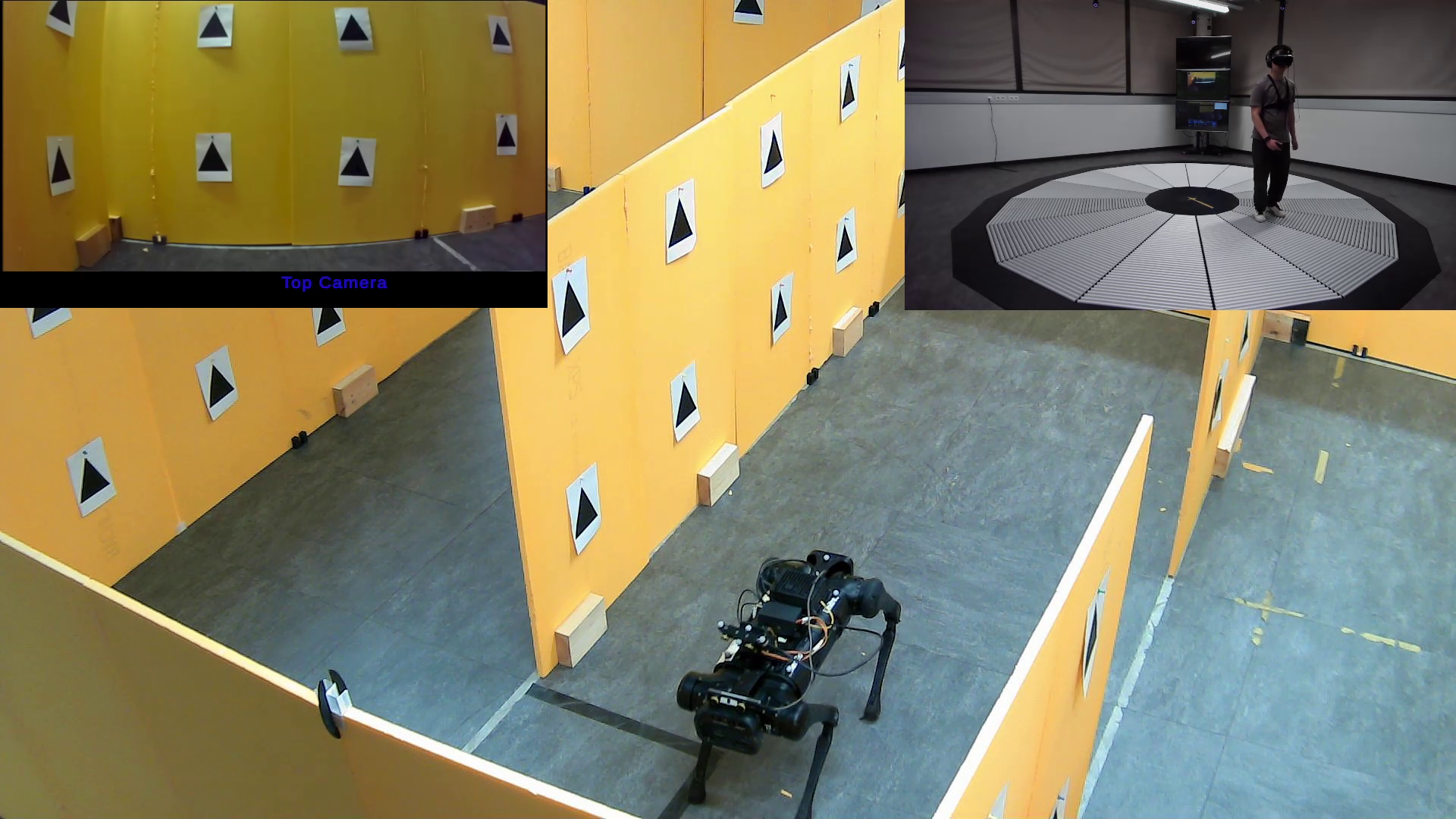
The inspection task determines which robot, cameras and robot-mounted sensors are needed. An immersive interface combines the remote view with spatial information and a way to identify details for closer attention. Drone-based inspection could be developed where an aerial platform suits the site and task.
Research and demonstrations
The combined telepresence and inspection page includes live robot navigation and a reconstructed underground environment. These provide examples of remote control and detailed scene exploration within a shared framework.
Adapting it to your workflow
A project would adapt movement, communication and sensing to the actual terrain and site. A drone integration would require platform-specific controls, views and operating requirements. Inspection procedures and the handover of observations would be defined, followed by field evaluation in representative conditions.
What a project could evaluate
A project could assess accessible inspection areas, the usefulness of captured observations, operator workload and the reliability of the workflow at the intended site. Travel, time spent in hazardous areas and the need for repeat visits could be compared with the existing inspection workflow.