Analyse human movement during work
Record how people move, reach and coordinate while completing a task. Movement analysis can help teams examine workspace access, task sequences and interaction around equipment in real or virtual settings.
Potential benefits
- Identify movement and access issues that task completion times alone may miss.
- Compare workstation layouts or procedures before adopting changes.
- Give design teams measured evidence alongside worker feedback.
Relevant challenges
Training and Onboarding
- It can be difficult to check whether someone can perform a task independently.
Process Improvement and Decision Support
- People’s practical experience and machine measurements are rarely considered together.
How the approach works
Motion tracking records body movement while the task setup captures relevant actions and performance. Task-specific measures can relate movement paths, reaches and coordination to what the participant is doing.
Research and demonstrations
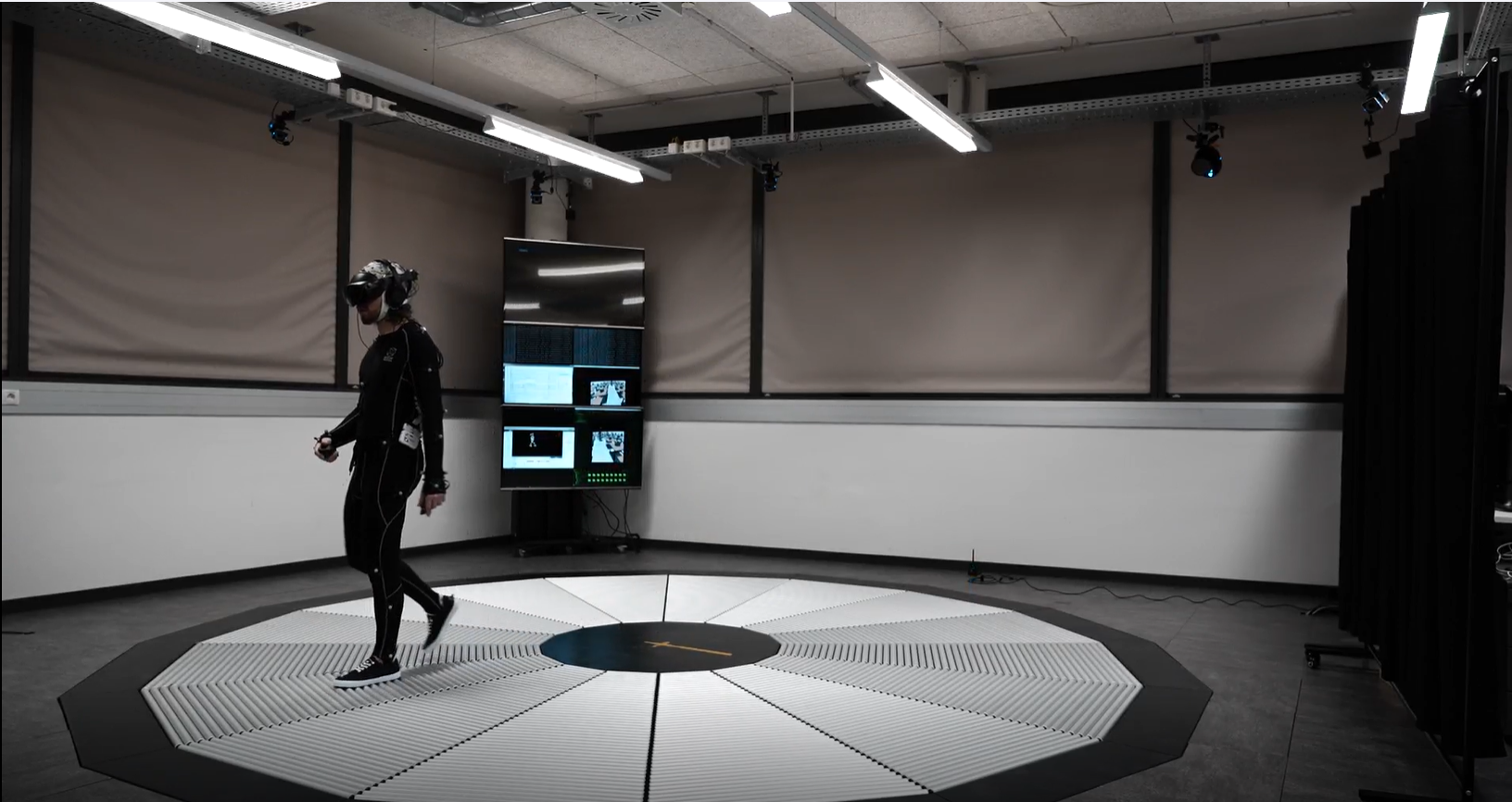
The movement testbed includes Vicon full-body motion capture alongside a virtual reality (VR) task and alternative movement controls. The same measurement approach could be configured around a representative physical operation.
Adapting it to your workflow
A project would define movement questions, select suitable measures and arrange tracking around the task. Data streams would be synchronised and the analysis checked before its results are used to inform decisions.
What a project could evaluate
A project could examine movement routes, reach and coordination, together with task performance and participant feedback on the working arrangement.