Shared human and AI robot control
Investigate how a person and an intelligent system could share robot control. A project could explore assistance with navigation or manipulation while keeping the operator able to understand, redirect or stop the selected actions.
Potential benefits
- Explore assistance with selected robot actions while preserving human intervention.
- Investigate whether shared control reduces effort without reducing operator understanding.
- Clarify how responsibility and control should pass between person and system.
Relevant challenges
Remote Support and Collaboration
- Remote users may have limited ability to interact with or inspect the physical environment
Inspection and Monitoring
- Inspections can require people to enter dangerous or hard-to-access environments
How the approach works
The robot task is divided into actions or decisions that could be supported by automation and those that require human direction. Examples could include assistance with route following or a defined manipulation action. Research would establish how control is shared, how assistance is communicated and how the operator intervenes.
Research and demonstrations
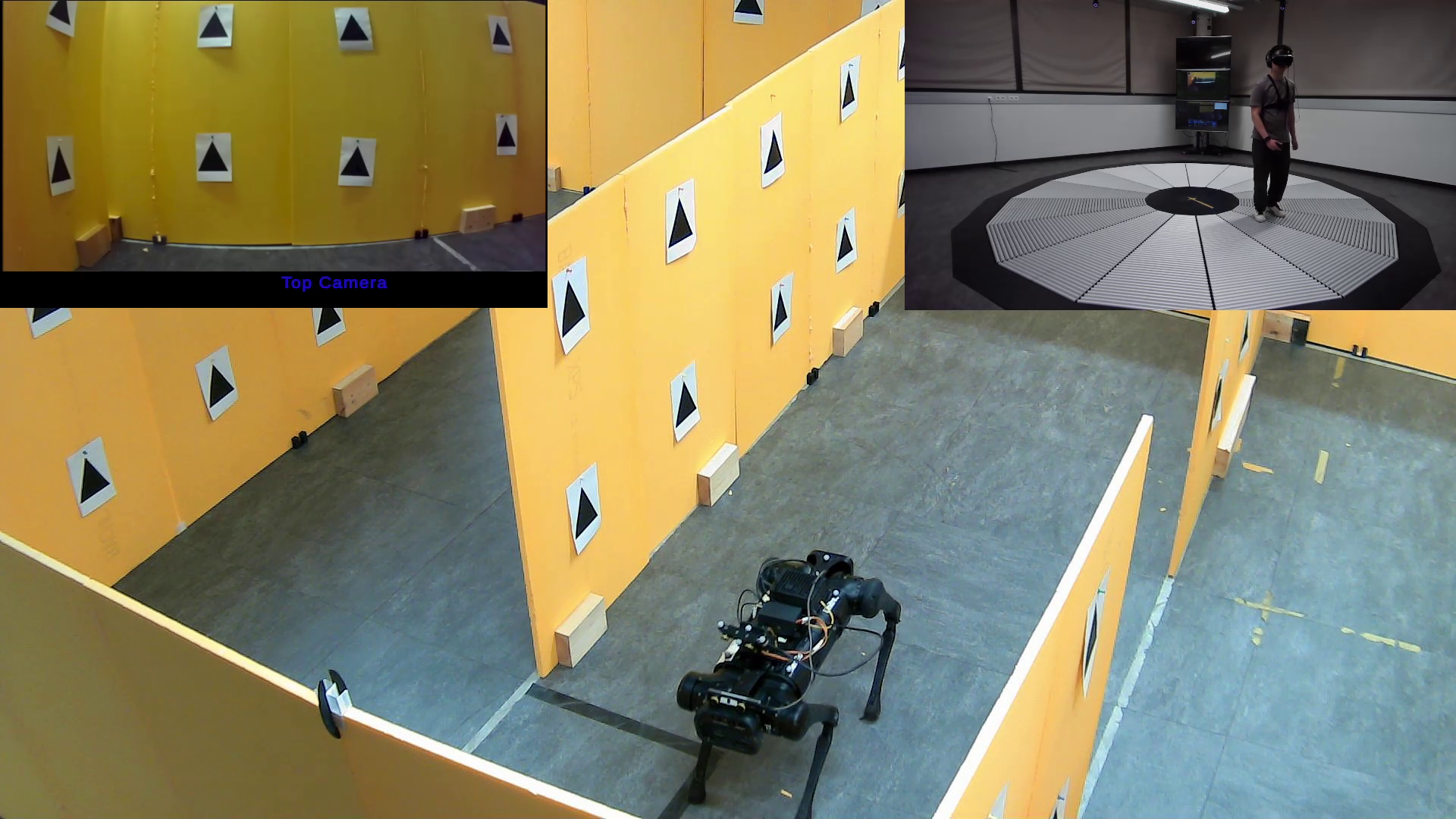
The telepresence framework provides remote-operation interfaces and human control of robot movement and viewpoints. Shared autonomy would extend this foundation with an automation policy and a defined relationship between operator and system decisions.
Adapting it to your workflow
A project would develop the autonomy and control-sharing rules, define oversight and intervention and design a study around the selected task. Transfer of control would be evaluated alongside the robot’s behaviour.
What a project could evaluate
Measures could include task success, operator understanding, intervention effectiveness, workload and whether responsibility remains clear when control is shared.