Understand and guide robot autonomy
Explore interfaces that help people understand, redirect or override robot assistance. The focus is on maintaining a useful human role when navigation or manipulation includes autonomous actions.
Potential benefits
- Make autonomous robot actions easier for operators to understand.
- Support timely intervention when behaviour needs to change.
- Help teams evaluate whether control transitions are clear and usable.
Relevant challenges
Remote Support and Collaboration
- Remote users may have limited ability to interact with or inspect the physical environment
Inspection and Monitoring
- Multiple camera feeds can be difficult to interpret simultaneously
How the approach works
The interface would communicate what the robot is doing and provide suitable ways to intervene. Explanations and control transitions would be designed around what the operator needs to know to guide the task.
Research and demonstrations
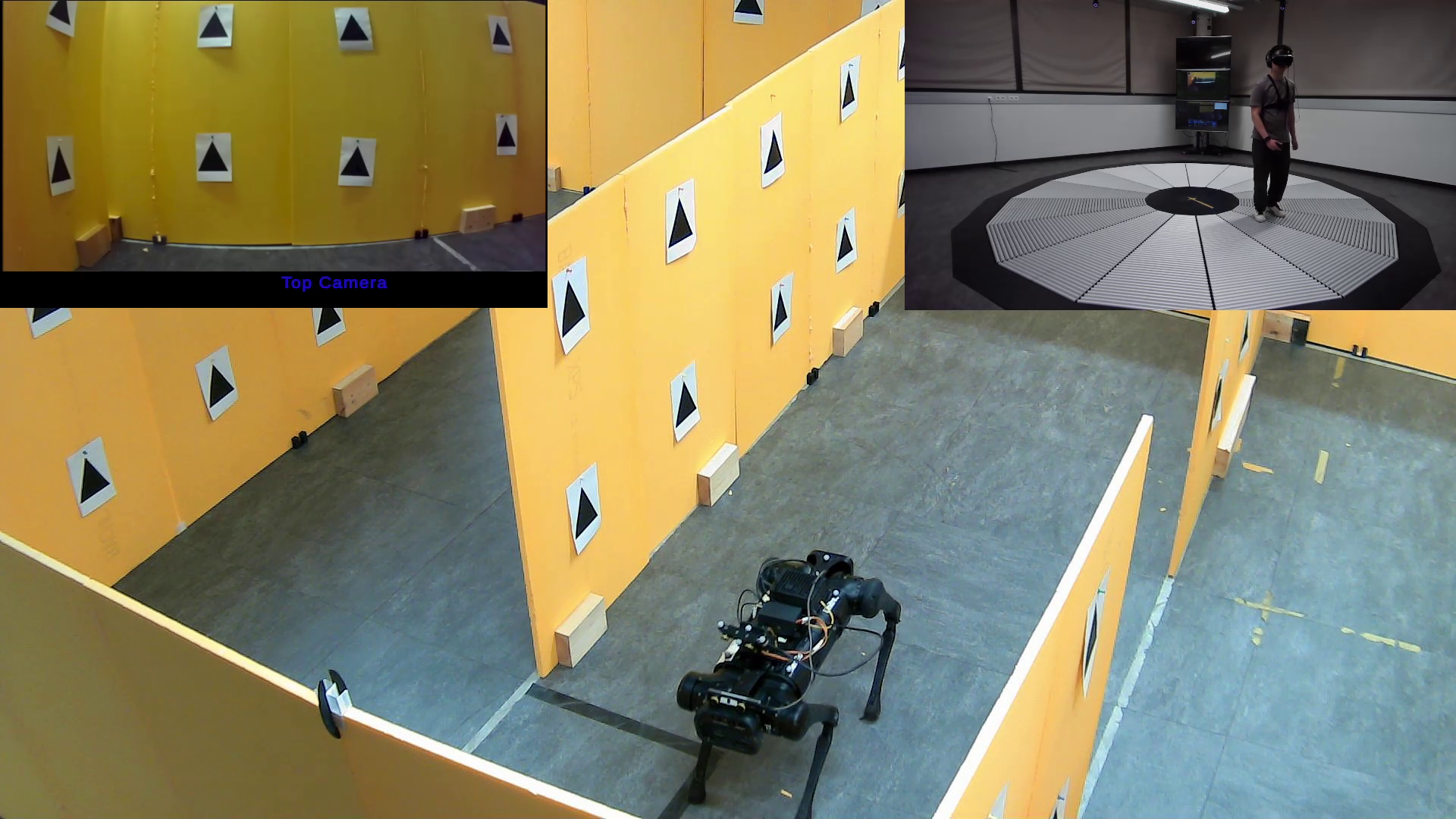
The existing remote-operation interfaces provide a basis for studying human oversight. Adding autonomous behaviour would create further questions about explanation, intervention and the safe transfer of control.
Adapting it to your workflow
A project would connect the target autonomy functions and develop the explanation and intervention mechanisms. Evaluation would examine how control returns to the person and how the interface behaves when plans or conditions change.
What a project could evaluate
A project could assess understanding of robot actions, timely intervention, recovery from unexpected behaviour and the clarity of control transitions.